Changing Money in Bali: Licensed Money Changers, ATM Fees and How Much Cash You Need
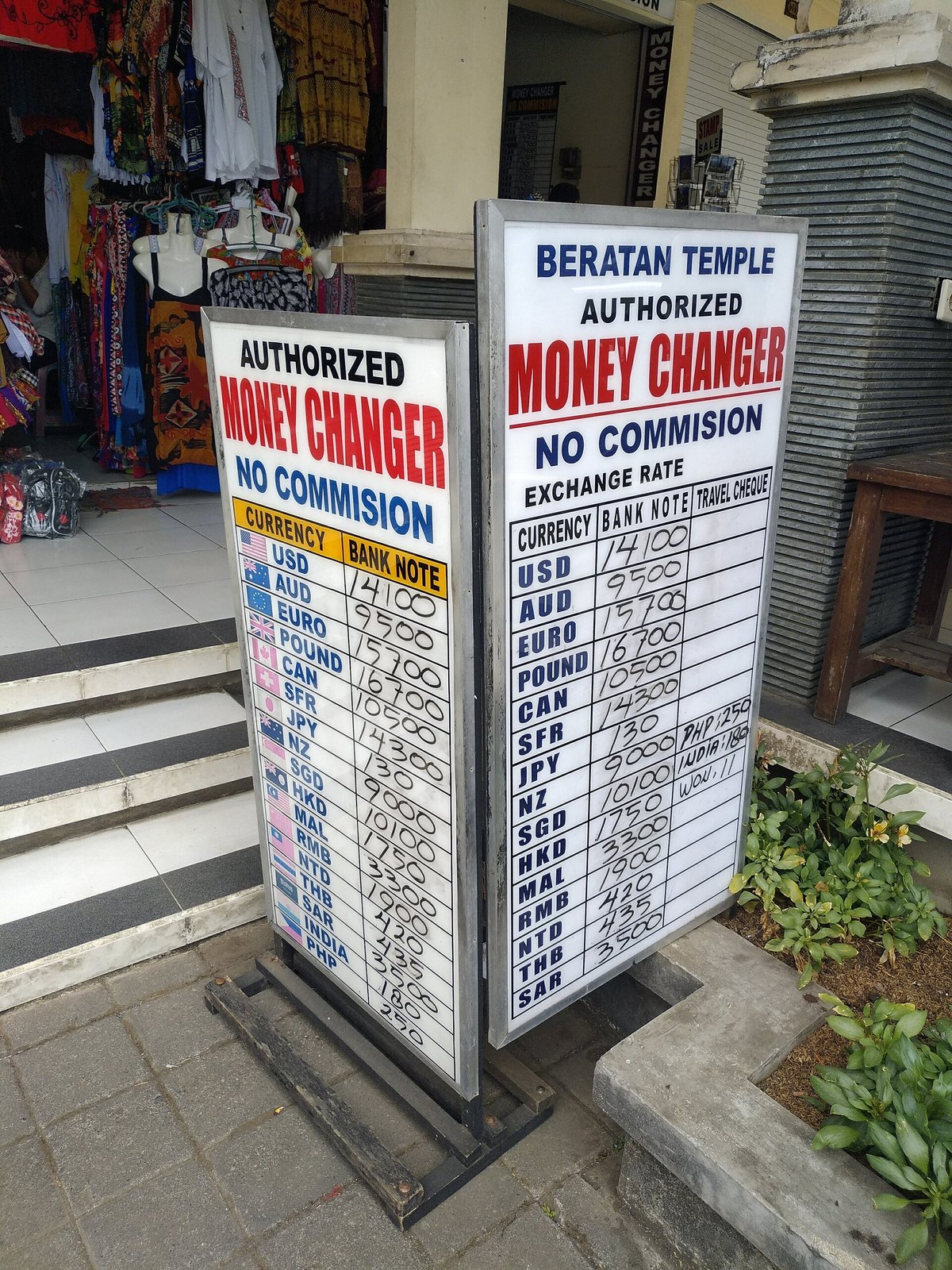
A money changer board in Bali. The rates on it are from an earlier year. Photo: Sasha India, Wikimedia Commons (CC BY 2.0).
This guide contains affiliate links. If you book through them we may earn a small commission, at no extra cost to you. How we make money
Bali runs on rupiah, and the rupiah comes with a lot of zeros. On November 5, 2026, one US dollar bought about IDR 18,100. A IDR 100,000 note, the biggest one, is worth a little over US$5.
That is the first thing to get used to. The second is that the cheapest way to get rupiah is not the counter you walk past first.
What is the exchange rate in Bali right now?
Rates move daily, so check a currency site the morning you change money. On November 5, 2026, the mid-market rate was about IDR 18,129 to the US dollar. A good licensed changer in town will sit a little below that. Anything far above it is a trap, and anything far below it is a bad deal.
For quick mental maths, drop four zeros and halve: IDR 100,000 is about US$5.50, IDR 50,000 is about US$2.75, IDR 20,000 is about US$1.10.
Where should you exchange money in Bali?
At a licensed money changer in town. Licensed means the shop holds a Bank Indonesia permit and shows the green “KUPVA Berizin” sign. Bank Indonesia’s Bali office also launched a portal, moneychangerbali.com, where you can look a shop up, and it is tied to the province’s Love Bali tourist portal. Bring your passport. Changers are supposed to record it.
These shops post their rates on a board outside, usually with “no commission” written large. The rate on the board is the whole deal, so compare boards rather than asking about fees. Kuta, Seminyak, Canggu, Sanur and Ubud all have several within walking distance of each other.
The airport counters in the arrivals hall are the easy option and the expensive one. Their rates build in a margin because you have no alternative yet. Change enough for a taxi and a meal, or skip them if you already have a driver booked and a card that works at ATMs.
Hotel front desks are worse again. One Korean travel guide puts their rates 5 to 10 percent behind the shops in town. Fine for IDR 200,000 at midnight, not for your week’s spending.
If you’ve pre-booked your airport pickup, you don’t need any cash at all until you reach the hotel.
Compare Bali airport transfers on Klook
How do money changer scams work?
The old Bali scam is a tiny booth down a side street with a rate noticeably better than everyone else’s. The counting is the trick. The clerk counts the pile in front of you, then folds a few notes under the counter as they hand it over, or counts fast enough that you lose track of the 10,000 and 100,000 notes, which look similar in pink and red.
Three habits avoid all of it. Use shops with the licence sign. Count the money yourself, note by note, before you step away. And don’t let anyone take the pile back “to recount” after you’ve counted it.
Using ATMs in Bali
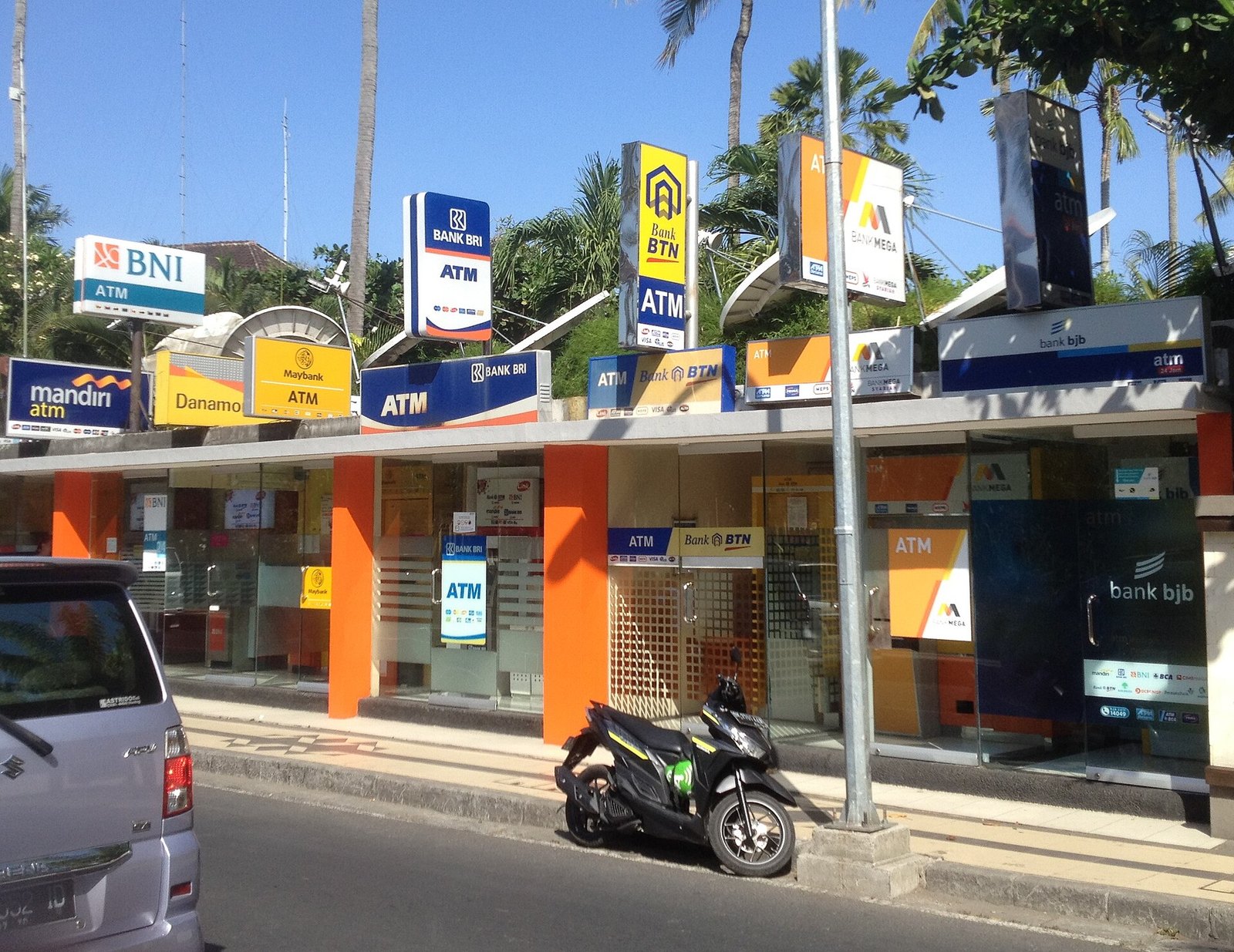
ATMs are everywhere in the south and in Ubud, usually in glass booths outside minimarts and bank branches. The machines dispense IDR 50,000 or IDR 100,000 notes, and the booth often says which.
Three things decide what a withdrawal costs you.
The local fee. Most Indonesian ATMs charge foreign cards a fixed fee per withdrawal, commonly reported at IDR 7,500 to 20,000. Bank Mandiri has been reported to charge IDR 50,000 for foreign cards since February 2026, while BNI and BRI machines are reported with no local fee. The screen tells you before you confirm. If it says an additional fee applies and you don’t like the number, cancel and try the next booth.
The limit. Many machines cap a single withdrawal at IDR 1 to 2.5 million, which is only about US$55 to 140. That matters because the fixed fee is the same whether you take out IDR 500,000 or IDR 2,500,000.
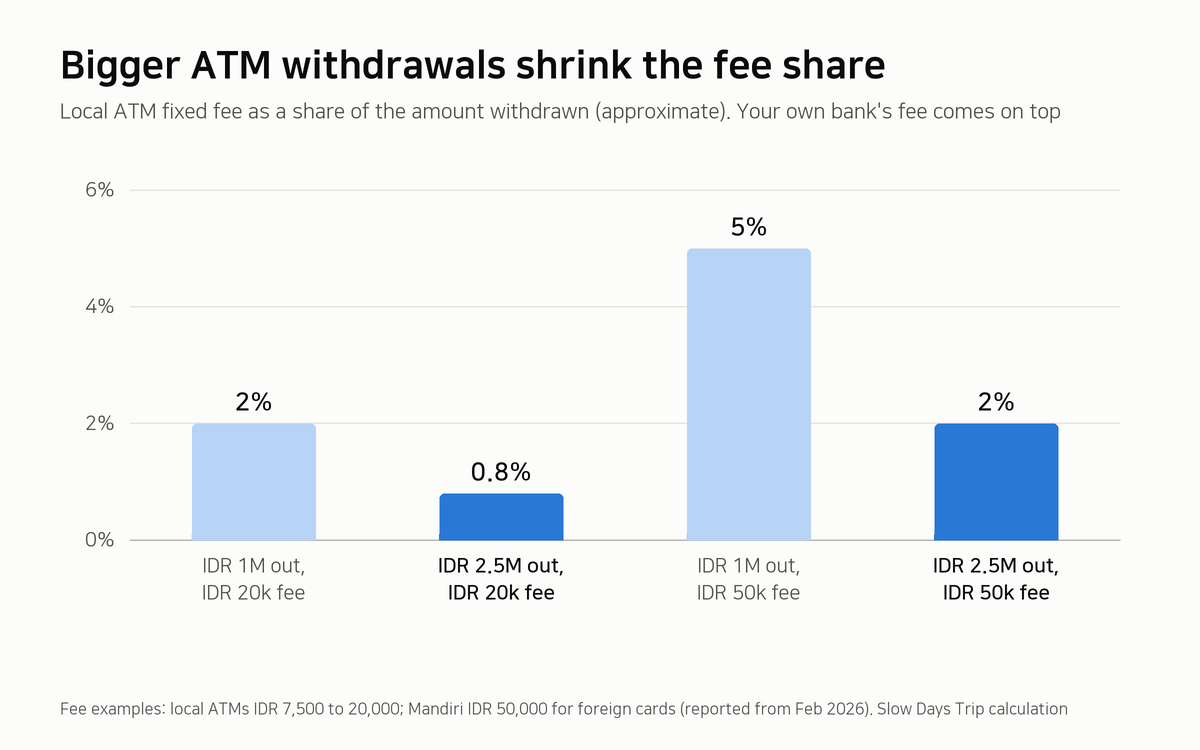
Your own bank. Most home banks add a foreign ATM fee, a currency conversion fee of around 1 to 3 percent, or both. A travel card with no foreign fees fixes this side of the equation. Which card is best depends on where you bank, so check your own bank’s terms before you fly.
So the rule is to withdraw the maximum the machine allows, as few times as possible, from a bank that doesn’t add its own fee.
Always choose rupiah, never your home currency
At some point the ATM, or a card terminal in a shop, will offer to charge you in US dollars, pounds or Australian dollars instead of rupiah. This is dynamic currency conversion. The rate behind it is set by the machine’s operator and it is almost always worse than what your card issuer would give you.
Choose “IDR”, “local currency” or “without conversion”. If the screen is confusing, decline the conversion. This one choice saves more than most of the fee-hunting above.
How much cash do you need?
Not much. Cards work at malls, supermarkets, chain cafes, most restaurants with a printed menu, and at any hotel. Grab and Gojek charge the card in the app. Day tours, airport transfers, spa treatments and tickets booked through Klook are paid online before you arrive, in your own currency, which takes a big chunk of the trip out of the cash economy altogether.
See private car and driver prices on Klook
What still needs cash: warungs and street food, temple entrance fees, parking (IDR 2,000 to 20,000), beach entrance fees, small shops, laundry, tips, and the shuttle at places like Lempuyang. One guide puts a sensible float at IDR 1 to 1.5 million, around US$55 to 85, and that matches what a few days of small spending looks like. Top it up from an ATM rather than changing a large sum on day one.
| Way to pay | Typical cost to you | Good for |
|---|---|---|
| Licensed money changer in town | Small spread below mid-market | Your main cash supply |
| Airport counter | Wider spread | Taxi and first meal only |
| ATM, no-fee bank | Local fixed fee only, IDR 0 to 20,000 | Topping up every few days |
| ATM, Mandiri | Reported IDR 50,000 per withdrawal | Avoid if another bank is nearby |
| Card in shops and apps | Your issuer’s foreign fee, often 0 to 3 percent | Everything with a card terminal |
Reading the notes
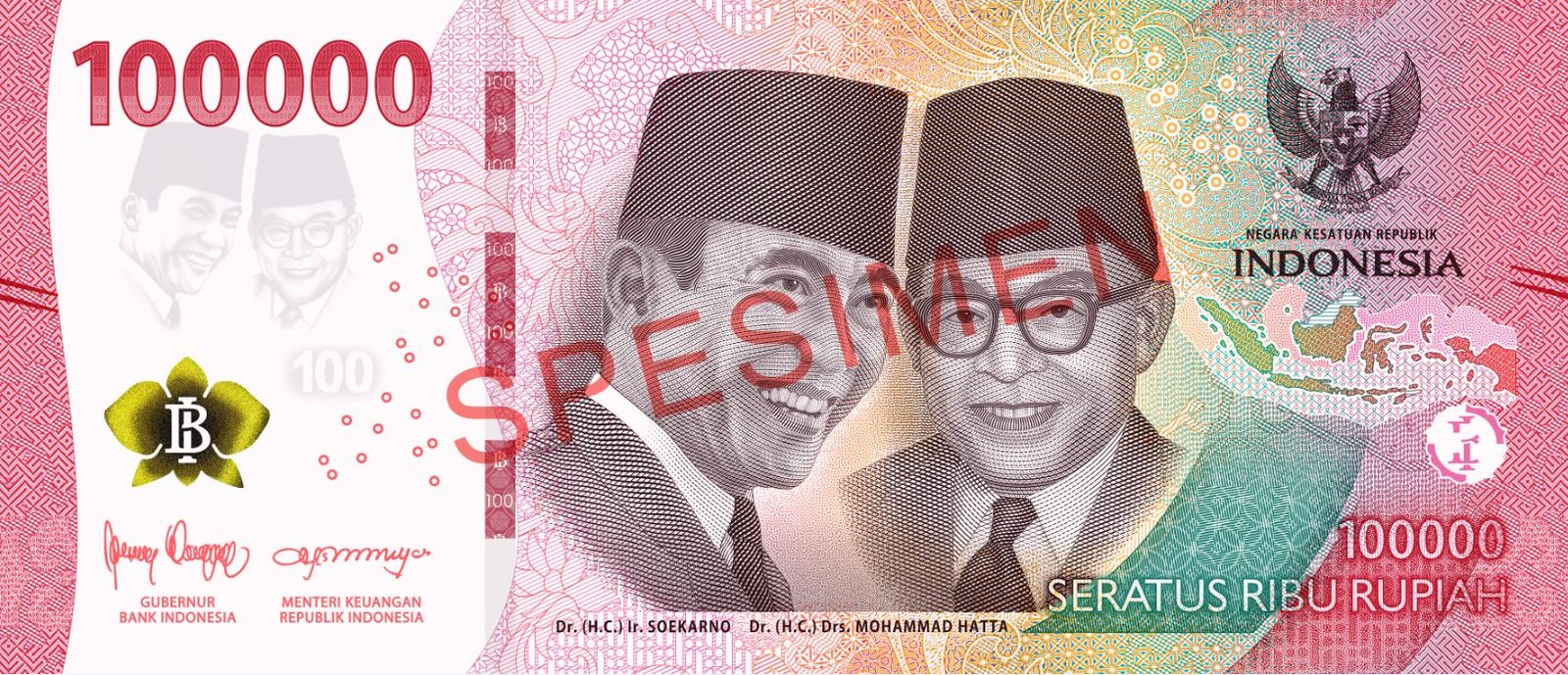
Notes come in IDR 100,000 (red), 50,000 (blue), 20,000 (green), 10,000 (purple), 5,000 (brown), 2,000 (grey) and 1,000. Both the 2016 and 2022 series are in circulation and look slightly different, which is normal. Coins exist but you’ll mostly meet them as change at supermarkets.
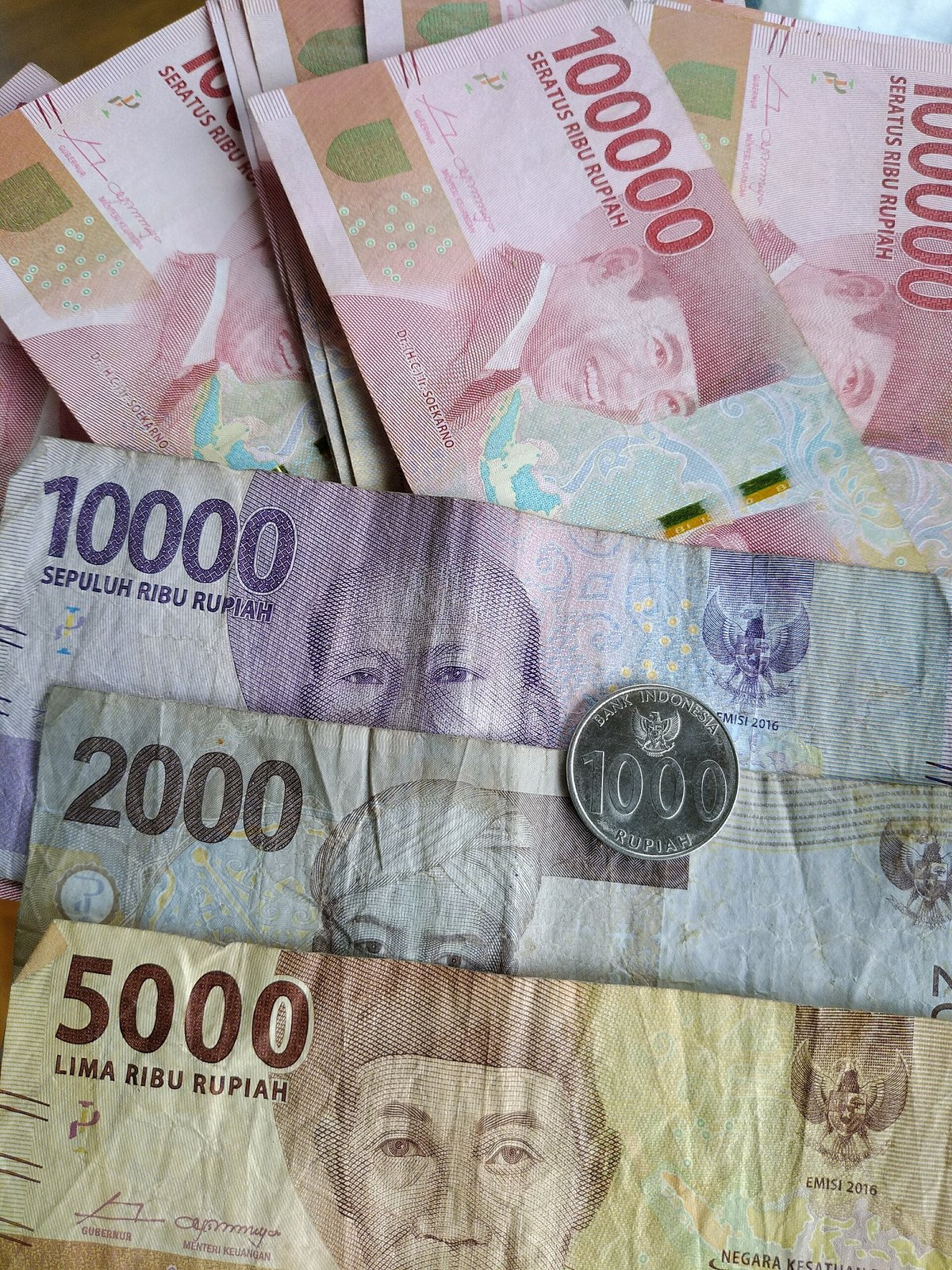
Two practical notes. Taxi drivers and warungs often can’t change a IDR 100,000 note for a IDR 15,000 purchase, so keep the 10,000s and 20,000s you get as change. And ask the changer for some smaller notes when you exchange, rather than a brick of 100,000s.
A data plan before you land
Checking a rate, finding the nearest BNI, and paying for a Grab all need data the moment you leave the terminal. An eSIM installed at home is the simplest way to have it, and it’s another thing paid by card rather than cash.
See Telkomsel eSIM plans on Klook
For the rest of the arrival sequence, our e-VOA and visa on arrival guide covers the IDR 500,000 visa and the tourist levy, and the airport transfer guide compares the taxi counter, Grab and a booked driver.
FAQ
Where is the best place to exchange money in Bali?
A licensed money changer in town, one that displays the Bank Indonesia KUPVA Berizin sign. Guides consistently report that these give better rates than the airport counters, hotel desks and bank branches. Bank Indonesia's Bali office runs moneychangerbali.com, where you can check whether a shop is licensed.
Should I exchange money at Bali airport?
Only a small amount for the first day. Airport counters price in a margin. If you have a card that works at ATMs, the BNI machines at the airport are an alternative, and several reports say they add no local fee.
How much does it cost to use an ATM in Bali?
Local banks commonly charge a fixed fee of about IDR 7,500 to 20,000 per withdrawal, and Bank Mandiri has been reported to charge foreign cards IDR 50,000 since February 2026. Your own bank's foreign transaction fee, often 1 to 3 percent, comes on top. Withdrawal limits per transaction are usually IDR 1 to 2.5 million, depending on the machine.
How much cash should I bring to Bali?
Less than you think. Malls, restaurants, Grab and Gojek, and anything you book through Klook take cards. Guides suggest IDR 1 to 1.5 million in cash for small purchases, parking, temple fees and warungs, topped up from an ATM when needed.
Is it safe to exchange money in Bali?
At licensed changers, yes. The classic scam is at small unlicensed booths offering a rate that looks too good, where the notes are miscounted or folded during the handover. Count the money yourself before you leave the counter.