Bali in January: How Wet It Really Is, What Still Works, and Whether to Go
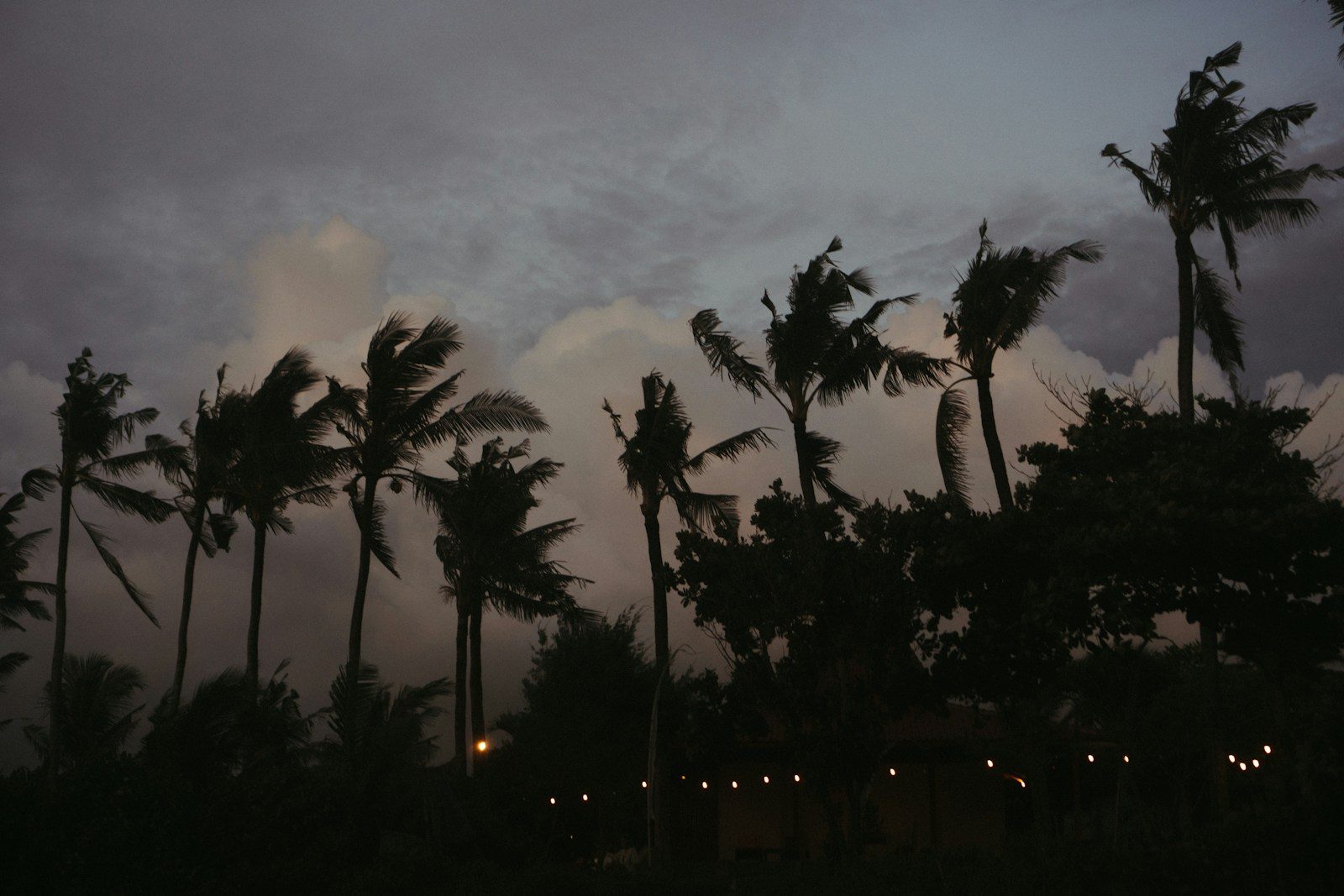
Palms against an evening sky before the rain. Photo: Polina Kuzovkova, Unsplash.
This guide contains affiliate links. If you book through them we may earn a small commission, at no extra cost to you. How we make money
January is the month people ask about most, because it’s the one the averages make look worst. It is the wettest month in Bali. It’s also warm, green, quieter after the first week, and most days give you several dry hours to use.
This page is the January-specific version of our Bali rainy season guide. That one covers November to March as a whole. Here it’s just the one month: the numbers, how the rain falls, what to drop, what to keep, and how to plan a day around it.
How much does it rain in Bali in January?
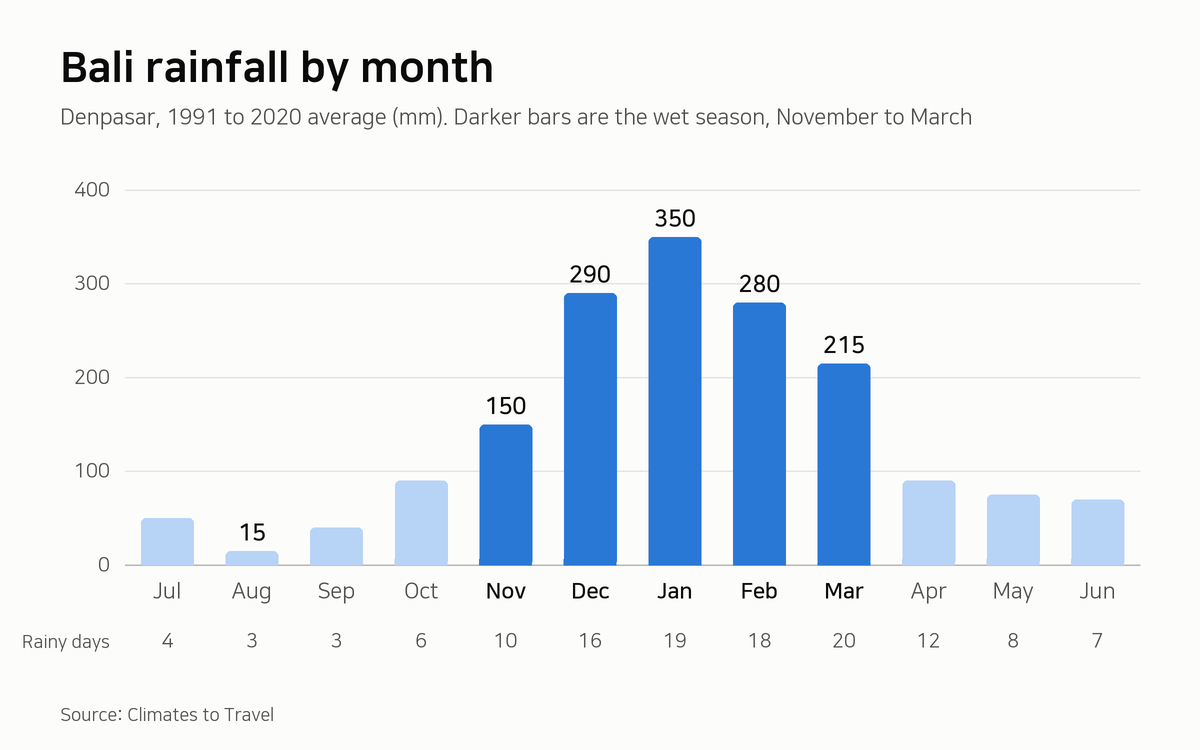
A lot, by the averages. The 1991 to 2020 record for Denpasar used by Climates to Travel gives 350 mm over 19 rainy days. Other datasets land lower: Climate-data.org has 296 mm, WeatherSpark about 262 mm over 18 days, and Weather2Travel 328 mm. The spread comes from different stations and definitions of a rainy day. A fair summary is 260 to 350 mm over 18 to 21 days.
For scale, August, the driest month, gets about 15 mm over 3 days. So January is roughly twenty times wetter than peak dry season.
Temperature doesn’t change much. Highs sit around 31°C, lows around 24°C, and the sea is about 29°C. What you notice is the humidity, which is high all day, and the sun, which drops to about 6 hours a day against 10 in July.
| January | August (for comparison) | |
|---|---|---|
| Rainfall | 260 to 350 mm | 15 mm |
| Rainy days | 18 to 21 | 3 |
| Sun per day | about 6 hours | about 10 hours |
| Daytime high | 31°C | 29°C |
| Night low | 24°C | 23°C |
Does it rain all day?
Usually not. The typical January day in the south starts dry or overcast, builds cloud through the middle of the day, and drops a heavy shower or a thunderstorm in the afternoon or early evening. Then it clears. Climates to Travel describes wet-season sunshine as a few hours a day between one shower and the next, and that matches how January tends to go.
The interior is wetter than the coast. Ubud, Bedugul and anything near the volcanoes get more afternoon storms, so the morning-first rule matters more there than in Seminyak or Uluwatu.
Multi-day washouts do happen. A tropical low passing south of Java can bring two or three grey days in a row. That’s the exception, not the rule, and it’s the reason to keep one indoor plan per area rather than a whole indoor itinerary.
Is the 2026/27 season different?
The official forecast says so. Indonesia’s weather agency, BMKG, said in September 2026 that a strong El Niño is delaying the rainy season nationally. Bali’s climatology station then forecast a late start for all 20 of the island’s climate zones, with December for the south coast and Ubud, a shorter season than normal, and a peak in February 2027 rather than January.
That shifts the odds a little in January’s favour this year. It doesn’t make January dry. The same station warned that a compressed season can mean heavier bursts when it does rain. Treat it as “probably not worse than the averages, possibly better”, and plan for the averages.
What about the sea and the boats?
The sea is warm and swimmable. Surf on the west coast, from Kuta up to Canggu, is bigger and messier in the wet season, and the water near river mouths carries more debris after rain. Beginners get cleaner, smaller waves on the east side around Sanur in January.
Boats are the real problem. Fast boats to Nusa Penida, Nusa Lembongan and the Gili Islands are cancelled or delayed more often from December to February when the swell is up, and the harbourmaster can halt all crossings when conditions are bad, as happened across the Bali strait routes in August 2025.
Two rules follow from that. Don’t book a crossing for the day before your flight home. And if you want an island, Nusa Penida is a shorter hop than the Gilis, so it carries less risk of being stranded. Our Bali to Gili fast boat guide covers the routes and what the operators do when they cancel.
Is January expensive?
The first week is. The stretch from about December 20 to January 5 is one of the two peak pricing periods of the year, with Christmas and New Year arrivals from Australia, Europe and across Asia. Hotels and flights are at or near their highest, and popular restaurants and beach clubs take bookings days ahead.
From roughly the second week of January the island empties out and rates drop. Mid to late January is one of the cheaper and quieter windows of the year, which is the trade for the weather.
What’s on in January 2027?
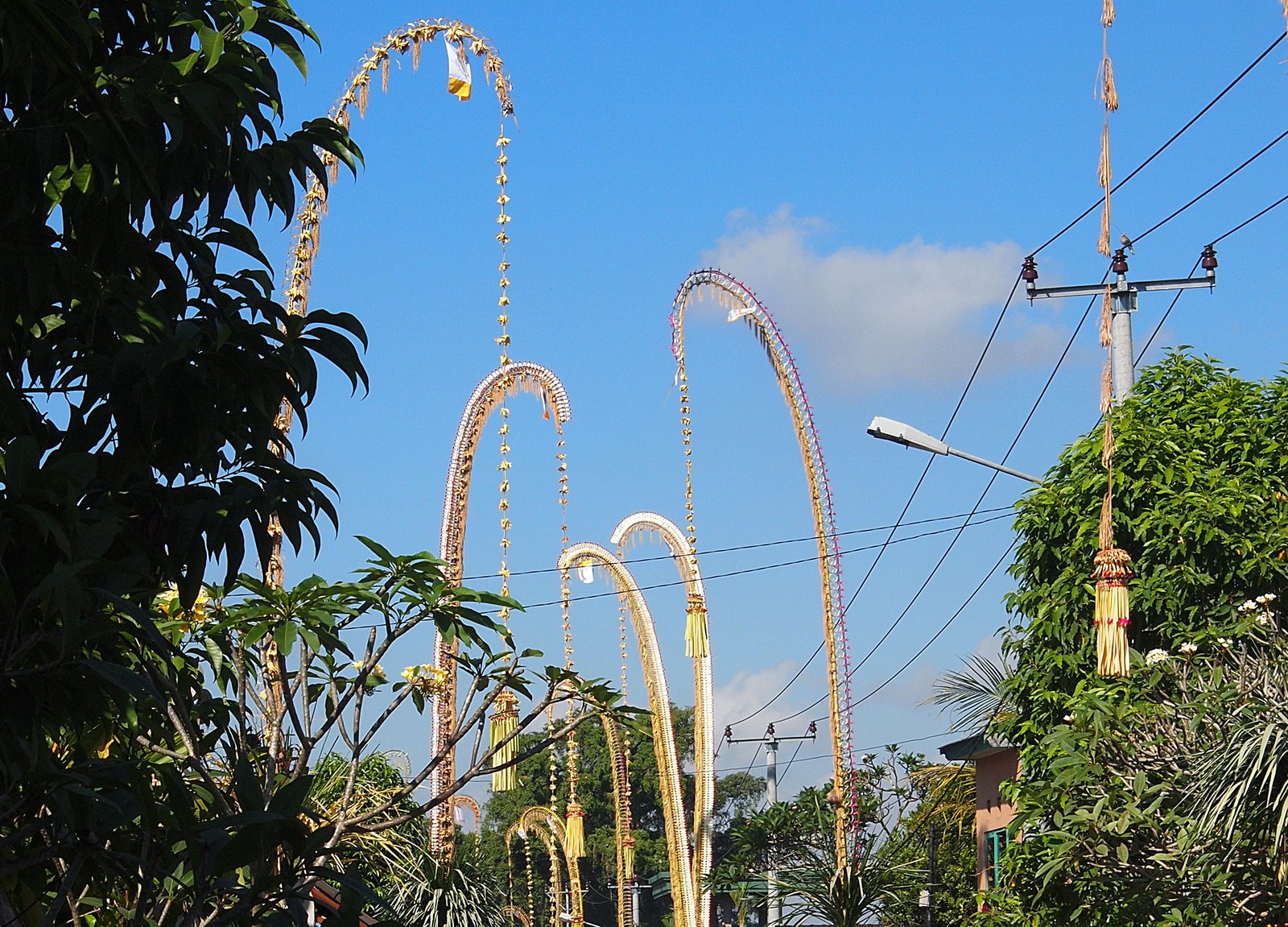
Galungan is on Wednesday, January 13, 2027, and Kuningan ten days later on Saturday, January 23. Galungan marks the victory of good over evil in Balinese Hinduism, and the days before it are when families put up penjor, the tall curved bamboo poles dressed with palm leaf, outside every house and business. For a visitor, the visible part is the streets, which look like this for the whole ten days.
On Galungan day itself, some family-run shops and warungs close or open late, and temples are busy with locals in ceremonial dress. Tourist businesses mostly run as normal. Drivers may ask for a later start that morning. It’s a good day to be in a village rather than a resort.
Nyepi, the Balinese New Year when the whole island shuts down for 24 hours including the airport, is on March 8, 2027. It doesn’t touch January. Lunar New Year in 2027 is February 6, so the Chinese New Year travel wave also misses January.
How should you plan a January day?
Front-load it. Whatever needs clear sky or dry ground goes first thing: beaches, rice terraces, waterfalls, temples with views. Lunch somewhere with a roof. Then either a plan that doesn’t care about rain, or nothing.
A car with a driver makes this workable. You’re not on a scooter in a downpour, the car waits while you’re inside, and if the afternoon turns you move the next stop forward or go home. On Klook a private car with an English-speaking driver listed from US$26.25 when we checked on November 5, 2026, and the 10-hour option for up to 5 people was US$38.59 in early October. Fuel is included; parking, tolls and entrance fees are not.
See private car charter prices on Klook
For the afternoons, have one indoor option per base. In Ubud, a cooking class fills a wet half-day well. The Ubud cooking class on Klook was rated 4.8 from about 1,300 reviews when we checked in October 2026, runs about 5 hours from a market visit and includes hotel pick-up. It was listed from about US$16.
See the Ubud cooking class on Klook
In the south, a spa afternoon is the obvious one. Melah Spa in Seminyak was rated 4.6 from 335 reviews in October, listed from about US$10 with free cancellation.
See Melah Spa in Seminyak on Klook
With children, Bali Safari Park is a reasonable rainy-afternoon bet. The tram ride through the animal zones is covered, the shows are under roofs, and the ticket on Klook was US$41.39 with 4.5 from about 2,600 reviews on November 5, 2026. Details in our Bali Safari Park guide.
What should you skip in January?
Sunrise treks on Mount Batur are the biggest gamble. Cloud sits on the summit more often than not, and you may climb in the dark for a grey view. If it matters to you, book it for the first or second morning so there’s time for a second attempt, as explained in our Mount Batur guide.
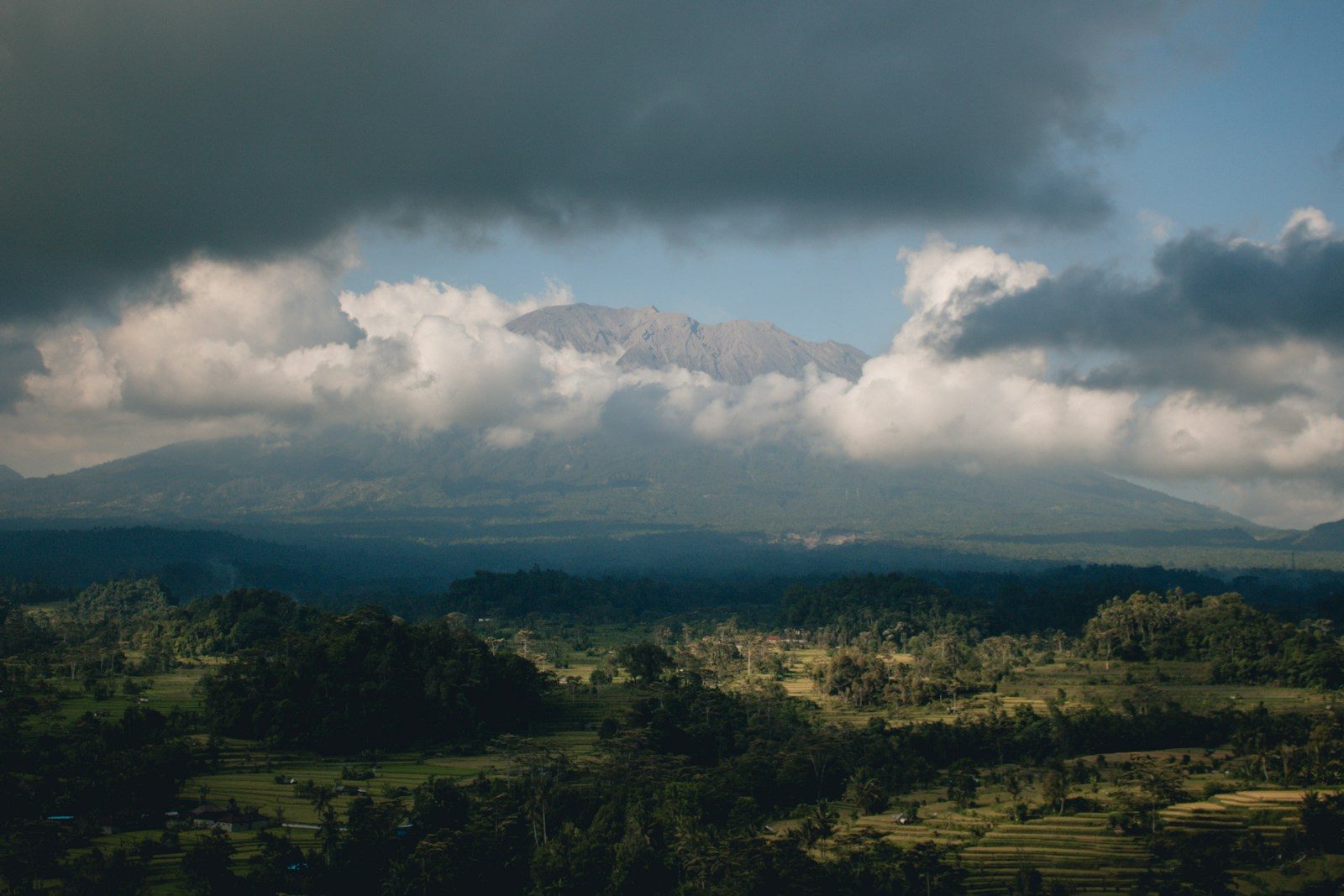
The Gate of Heaven photo at Lempuyang needs Mount Agung behind it. In January the mountain is often in cloud by the time the queue reaches you. Go at opening or accept the risk.
Long scooter days, and anything with a tight connection to a flight, are the other two.
What should you pack?
A light poncho or rain jacket, sandals with grip, quick-dry clothes, a waterproof pouch for your phone, and mosquito repellent, which matters more in the wet months. Ponchos are sold at every minimart on the island for about IDR 20,000, so don’t overthink it.
Leave the umbrella. It’s useless in wind and a liability anywhere monkeys live.
So, should you go in January?
If you have a free choice of month, no. May to September is better weather for less money than New Year week.
If January is when you can go, yes, with the plan above. Mornings outside, a car for the day, one indoor option per base, no boat the day before you fly, and an easy attitude to an afternoon storm. The island is green, the sea is warm, and after January 5 it’s quiet and cheap. That’s a fair trade for most people.
FAQ
Is January a bad time to visit Bali?
It's the wettest month on the long-term averages, but most days still have dry hours, the sea is warm and the island is at its greenest. If you can plan mornings outdoors and keep afternoons flexible, it works. If you need guaranteed sun or a clear volcano sunrise, pick a dry-season month.
How much does it rain in Bali in January?
Denpasar averages about 350 mm over 19 rainy days in the 1991 to 2020 record used by Climates to Travel. Other datasets give 260 to 330 mm over 18 to 23 days. Either way it's the wettest month of the year.
Does it rain all day in Bali in January?
Rarely. The usual pattern is a dry or cloudy morning, a heavy shower or storm in the afternoon or evening, then it clears. Multi-day washouts happen but are the exception.
Is January high season in Bali?
The first week is. Late December to early January is one of the most expensive periods of the year for flights and hotels. Prices normally ease from around the second week of January.
What's happening in Bali in January 2027?
Galungan falls on January 13, 2027 and Kuningan on January 23. Streets are lined with tall bamboo penjor poles and families spend the main days at temples. Nyepi, the day the whole island shuts down, is March 8, 2027, so it doesn't affect January.