Mount Batur in the Rainy Season: Your Chances of a Clear Sunrise, and How to Plan for a Cloudy One
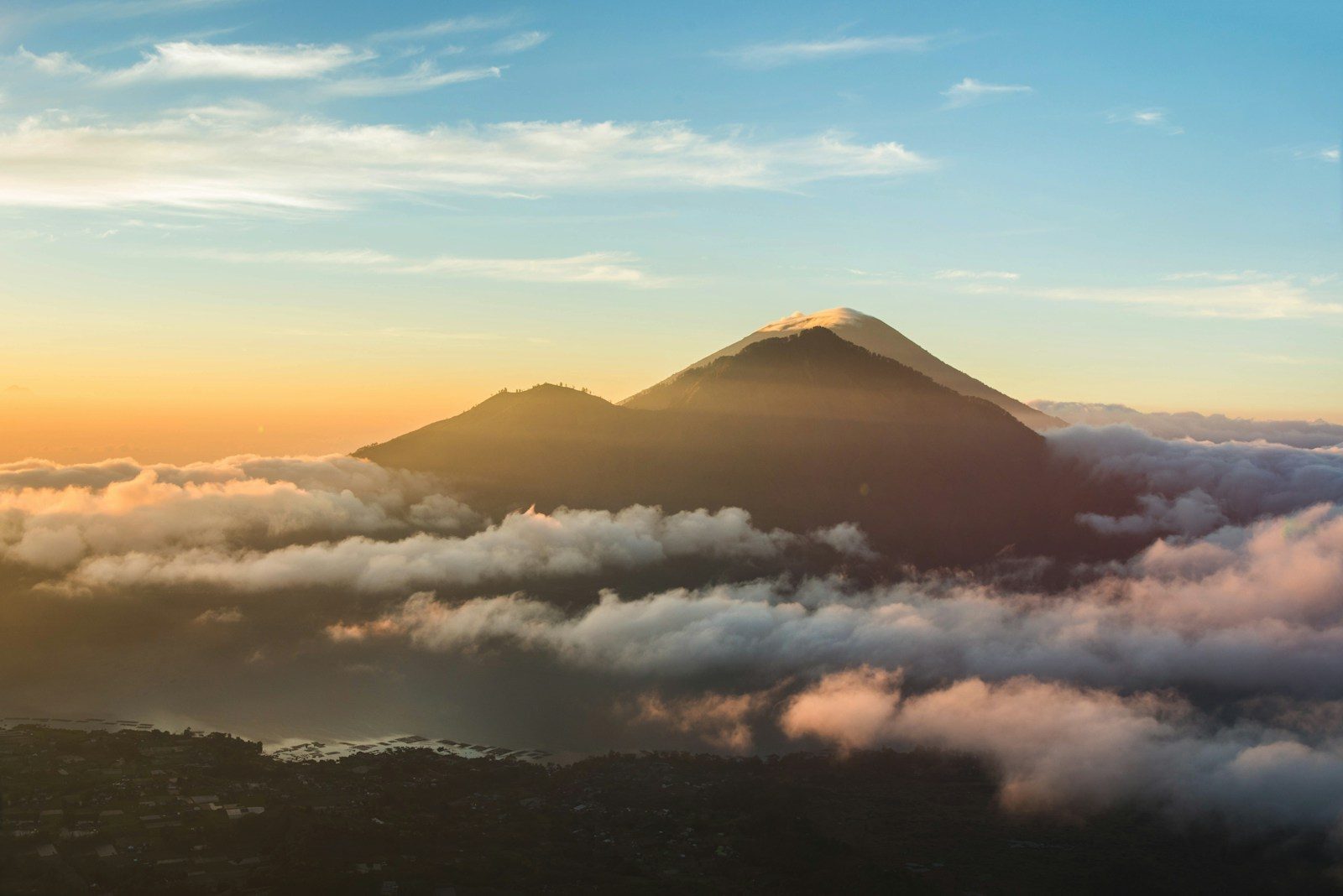
A sea of clouds seen from the Batur area. Photo: Hugo Villegas, Unsplash.
This guide contains affiliate links. If you book through them we may earn a small commission, at no extra cost to you. How we make money
You can climb Mount Batur in the rainy season, and tours run every day. The question is what you’ll see at the top. From November to March, cloud often sits on the summit at dawn, and some mornings you watch the sky go from black to grey without seeing the sun.
That doesn’t make it pointless. It just changes how you should book it. This page covers the rainy-season side only. For prices, packages and what the climb is like, see our main Mount Batur sunrise trek guide.
How much does it rain at Mount Batur in the wet season?
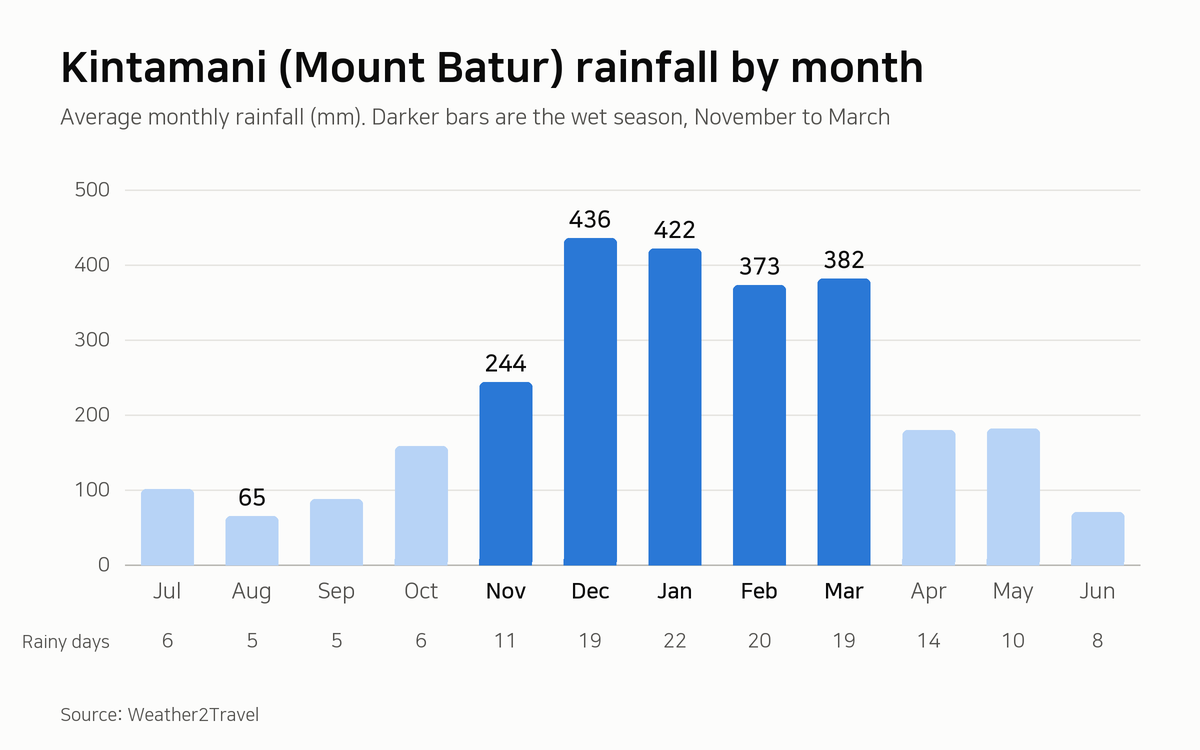
More than on the coast. Kintamani sits on the rim of the Batur caldera at roughly 1,500 m, and the highlands catch more rain than Kuta or Seminyak. Weather2Travel’s monthly averages for Kintamani put November at 244 mm over 11 rainy days, then a big jump: 436 mm in December, 422 mm in January, 373 mm in February and 382 mm in March, each with 19 to 22 rainy days.
For comparison, August averages 65 mm over 5 days. So December in the highlands is about six to seven times wetter than the driest month.
| Month | Rainfall (mm) | Rainy days |
|---|---|---|
| November | 244 | 11 |
| December | 436 | 19 |
| January | 422 | 22 |
| February | 373 | 20 |
| March | 382 | 19 |
| April | 180 | 14 |
| August (driest) | 65 | 5 |
A “rainy day” in these figures means any measurable rain, so a single afternoon shower counts. These are model-based averages for the area, not a reading from the summit itself, so treat them as a guide to the pattern rather than exact numbers.
Will you see the sunrise from Mount Batur in the rainy season?
Maybe. No operator or weather service publishes a clear-sunrise rate for Batur, and you should be wary of anyone who quotes one. Operators themselves say they can’t guarantee the view, especially in the wet season.
What the averages do tell you is the shape of the risk. November and April are a coin toss that leans your way. December to March is when you should plan for the possibility of grey.
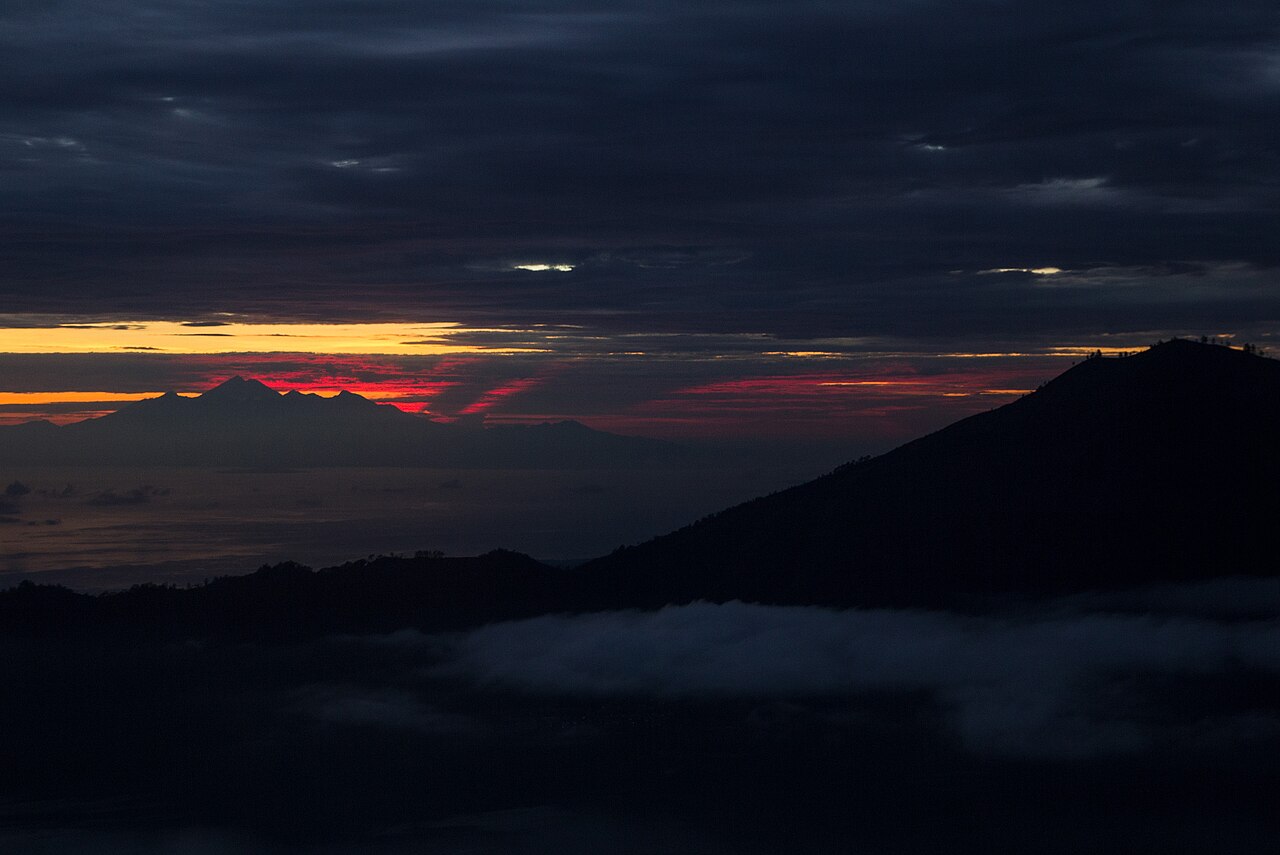
The good news is timing. Bali’s wet-season rain tends to come in the afternoon and evening, and the trek happens before dawn. You’ll often climb on a dry path and reach the top in cloud, rather than walking up in a downpour. Sometimes the cloud sits below the summit instead, and you get the sea-of-clouds view in the cover photo. That’s the upside of the wet season.
Check Mount Batur trek dates on Klook
How to schedule it so a cloudy morning doesn’t ruin it
Put Batur on your first or second morning in Bali, not your last. If the summit is fogged in, you still have days to go again or switch to the jeep. Leave it for the day before you fly and a cloudy morning means no second chance.
Pick a base that makes a second try easy. From Ubud the pickup is around 2am. From Canggu or Seminyak it’s closer to 1:30am, and the drive is longer. If Batur matters to you, a few nights in Ubud in the first half of your trip helps.
Check the forecast the evening before, but don’t trust it too much. A “rain” icon for Kintamani often reflects the afternoon storm, not the hours before 7am. Hourly forecasts and the cloud layer are more useful than the daily summary.
Keep the afternoon free. You’ll be back around midday after a 1am start, possibly damp. The afternoon is when the rain comes anyway, so that’s a good time for a nap, a spa or a café.
Trek or jeep in the rainy season?
Both run on the same mornings and face the same clouds, so neither gives you a better chance of the sun. The difference is what a bad morning costs you.
| Sunrise trek | Sunrise jeep | |
|---|---|---|
| Price on Klook (Nov 2026) | from about US$22 | from about US$13 |
| Rating | 4.7 from 5,000+ reviews | 4.9 from 16,600+ reviews |
| Effort | About 2 hours up, loose gravel near the top | Short walk from the vehicle |
| If it rains | You’re on the trail, on foot | You can wait it out in the jeep |
| If it’s cloudy | You’ve climbed for a grey view | You’ve lost a cheaper morning |
If you’re fit and the summit itself is the point, do the trek, ideally on an early morning in your trip. If you’re unsure about the weather, travelling with kids or older parents, or just want the view without the climb, the jeep makes more sense in the wet season. A cloudy jeep morning is a much smaller loss than a cloudy 2-hour climb.
See the sunrise jeep tour on Klook
Is the trail dangerous when it’s wet?
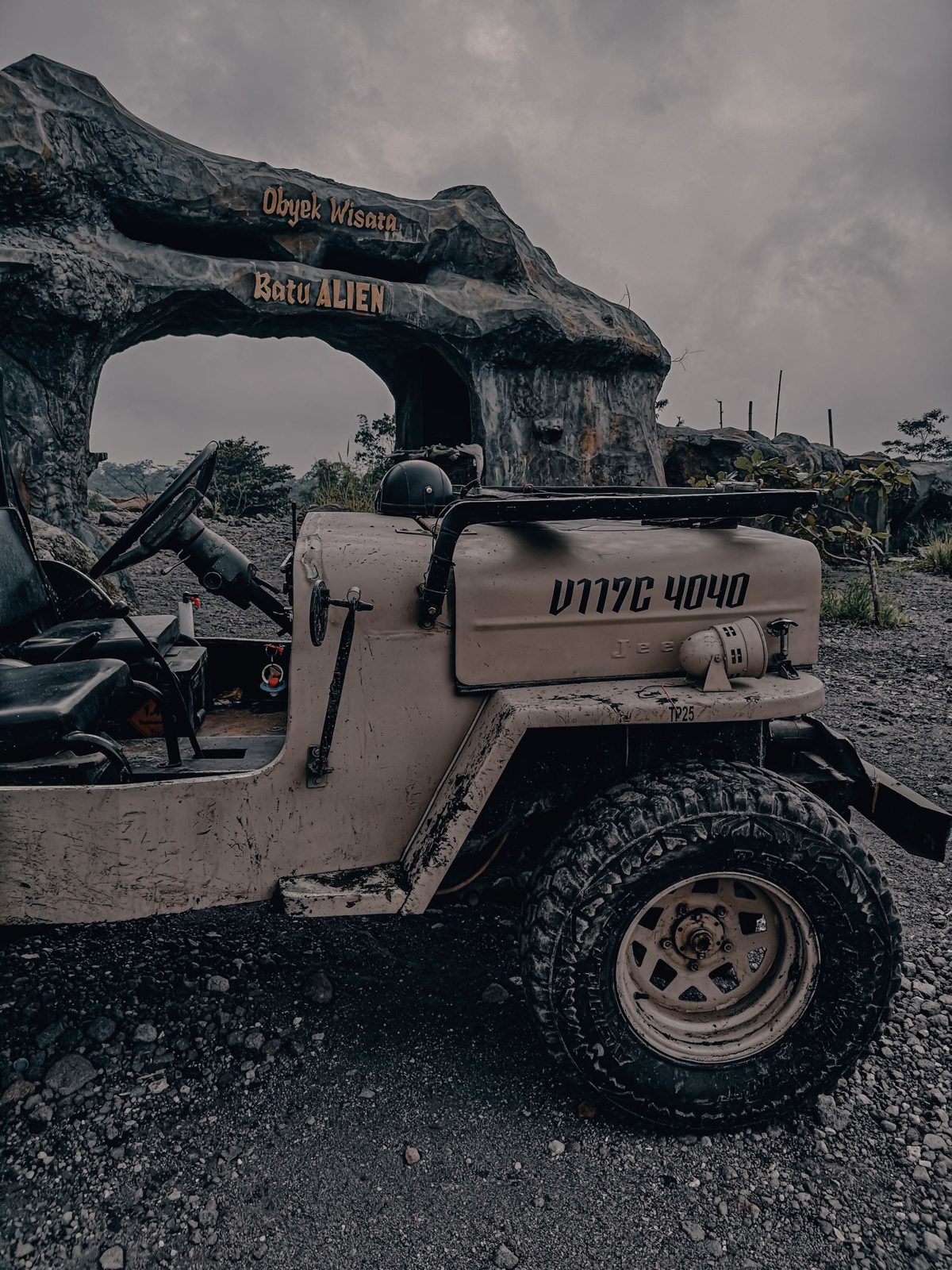
It’s harder, not reckless, with a guide. The lower part of the route goes through farmland and forest, which turns muddy after heavy rain. Higher up, the volcanic gravel stays loose whether wet or dry, and you’ll use your hands in a few places. Shoes with deep grip matter more in the wet months than at any other time.
Two things can stop a trek outright. One is a storm with lightning, which no guide will take a group up into. The other is volcanic activity. Batur is an active volcano, and the authorities can close the summit area when the alert level is raised. Check the current status on Indonesia’s official MAGMA site (magma.esdm.go.id) close to your date, and if there’s a closure, the operator will tell you.
What to wear and bring in the rainy season
Wear trainers or hiking shoes with a deep tread. Sandals and smooth-soled sneakers are a bad idea on wet ground. Quick-dry long pants are better than jeans or cotton leggings, which soak through and stay cold.
Bring a warm layer for the summit. It’s cold before sunrise at any time of year, and wind plus damp clothes makes it worse. A light rain jacket or a cheap poncho is worth carrying in your bag even if it’s dry at pickup.
Put your phone in a small waterproof pouch or zip bag. Pack a dry shirt and socks to change into for the drive back. A small towel takes up no space and helps.
What about cancellations and refunds?
Read the cancellation terms on the exact package before you pay. They’re set per package on Klook and differ between options. Standard listings across operators often allow a full refund if you cancel at least 24 hours ahead, but don’t assume that applies to yours.
If the operator cancels because of weather or a closure, you’re normally offered a new date or a refund. Contact them through the Klook app rather than arranging something on WhatsApp alone, so there’s a record. If you cancel yourself on the morning because the forecast looks bad, that usually counts as a late cancellation.
Is it worth doing Batur in the wet season at all?
If you’re in Bali for five days or more and it’s high on your list, yes. Book it early in the trip and accept that the view is a gamble. If you’re only there for a few days in December or January, or a clear sunrise is the only reason you’d go, consider skipping it this time and doing something that doesn’t depend on the sky.
For the wider picture of the season, see our Bali rainy season guide and the month pages for December and January.
FAQ
Can you climb Mount Batur in the rainy season?
Yes. Tours run all year. Rain mostly falls in the afternoon and evening, so the 4am climb is often dry or only drizzly. What changes is visibility at the top: cloud can sit on the summit and hide the sunrise.
What is the worst month for Mount Batur?
On Weather2Travel's averages for Kintamani, December (436 mm, 19 rainy days) and January (422 mm, 22 rainy days) are the wettest. February and March are only a little drier. August and September are the driest.
What happens if it rains on the day of my Batur trek?
Light rain usually doesn't stop the trek. If the operator cancels for safety, ask Klook or the operator about a new date or refund. Cancellation terms differ by package, so read the ones on your package before you pay.
Is the jeep tour better than the trek in the rainy season?
It's a safer bet for comfort, not for the view. Both depend on the same clouds. The jeep keeps you out of the mud and in a vehicle if the rain starts, and it's cheaper, so a cloudy morning costs you less.
What should I wear for Mount Batur in the rain?
Trainers or hiking shoes with real grip, quick-dry long pants, a warm layer and a light rain jacket or poncho. Cotton stays wet and cold on the summit. Pack a dry shirt for the drive back.